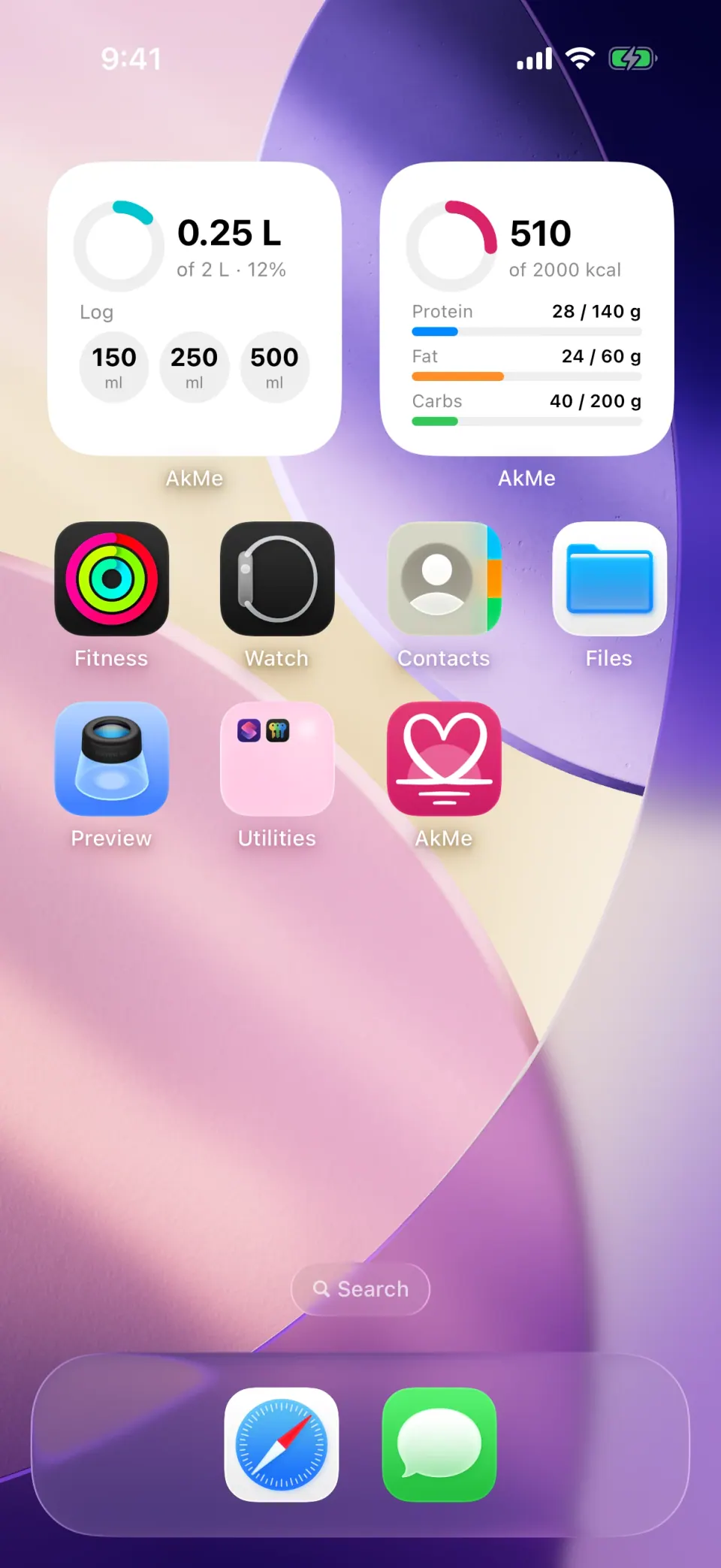
What does AkMe mean?
Akme (ἀκμή) is Greek for prime — the peak of one's powers. Ancient writers placed a person's akme at around forty. And the "Me" in the name is you: the team works with you, and you build yourself.
Why not just use ChatGPT?
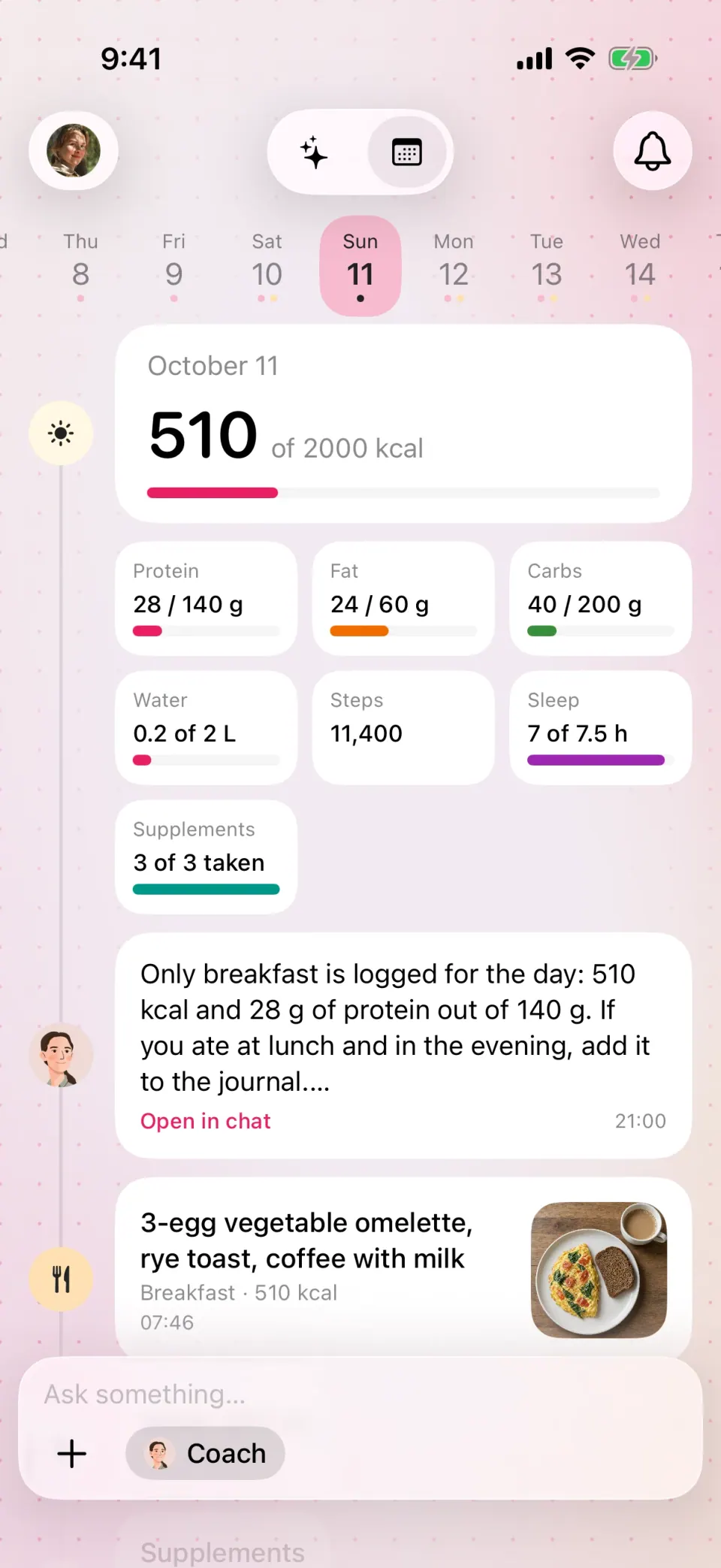
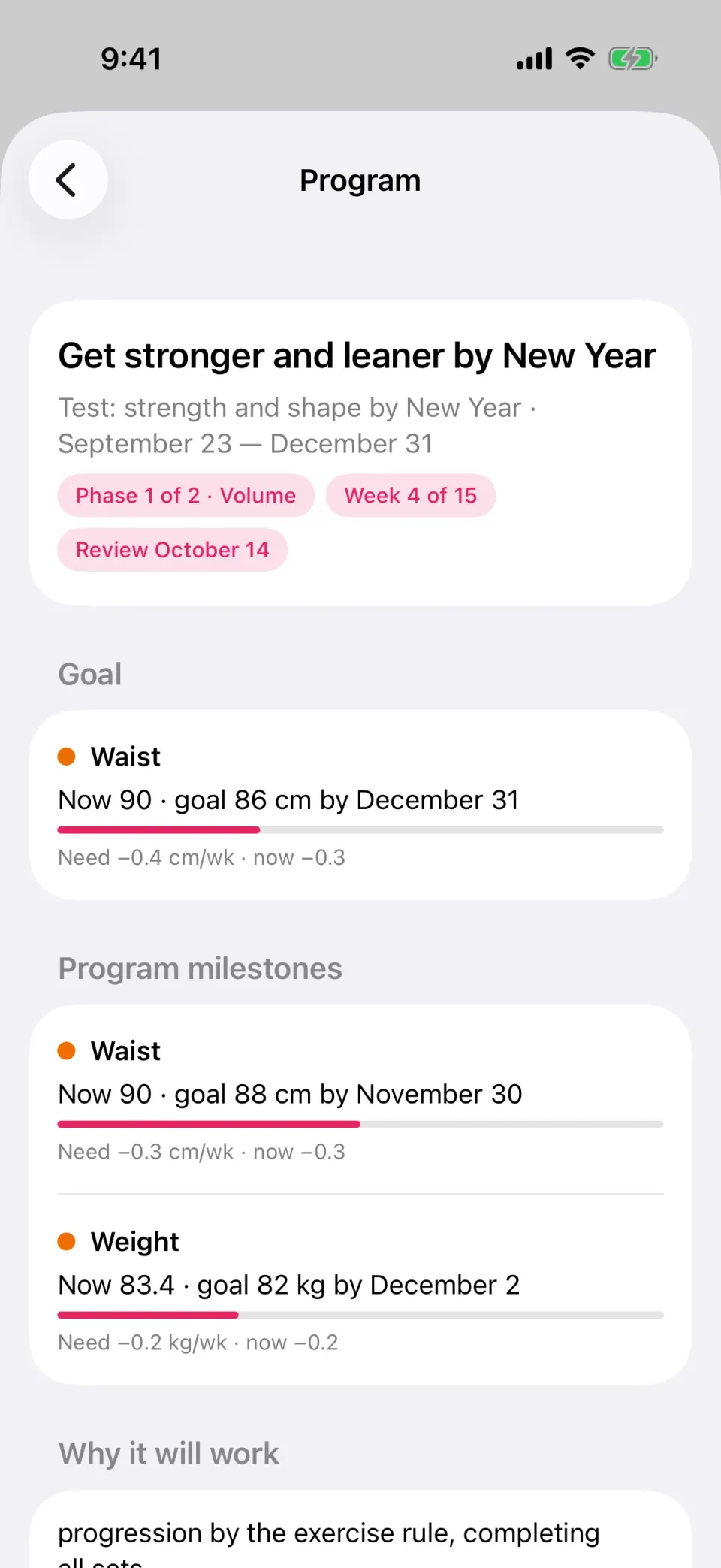
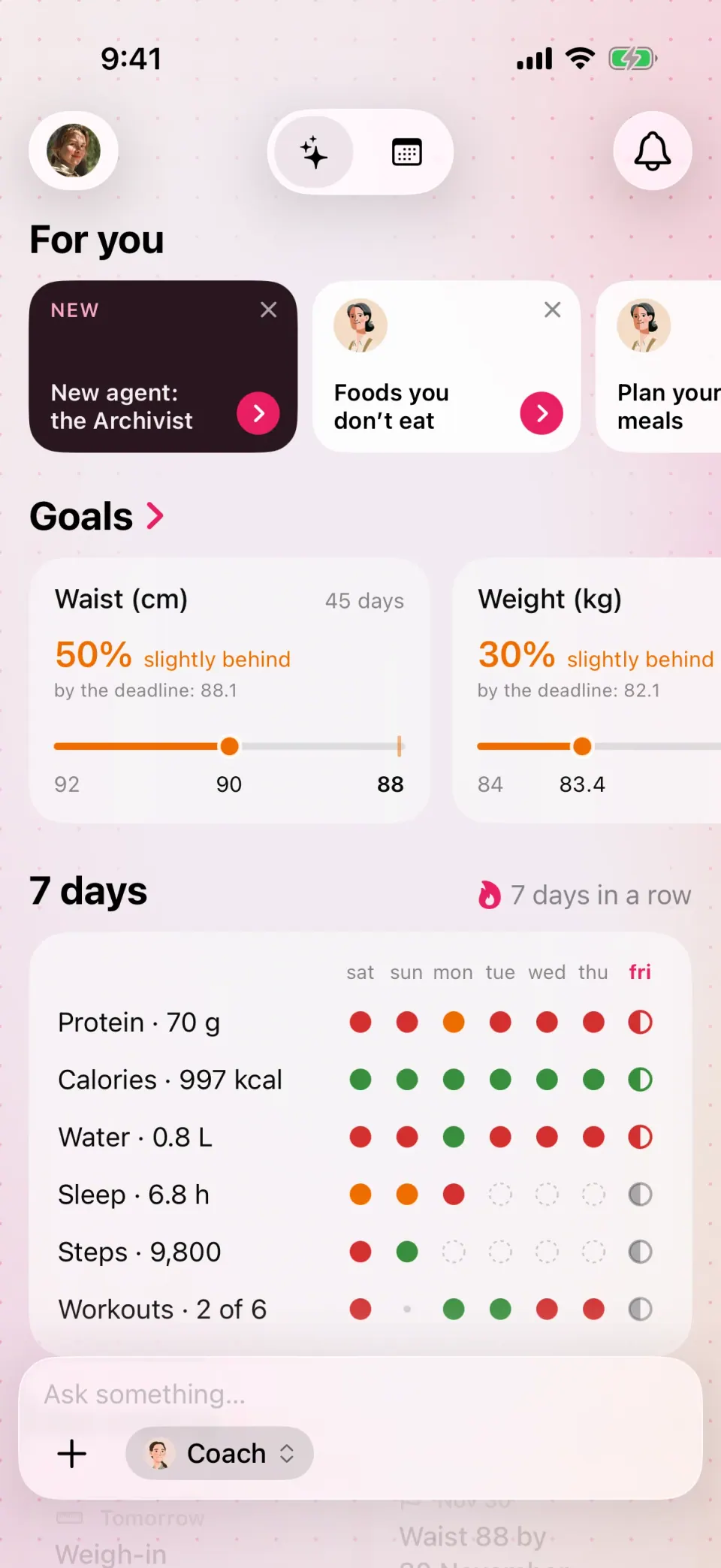
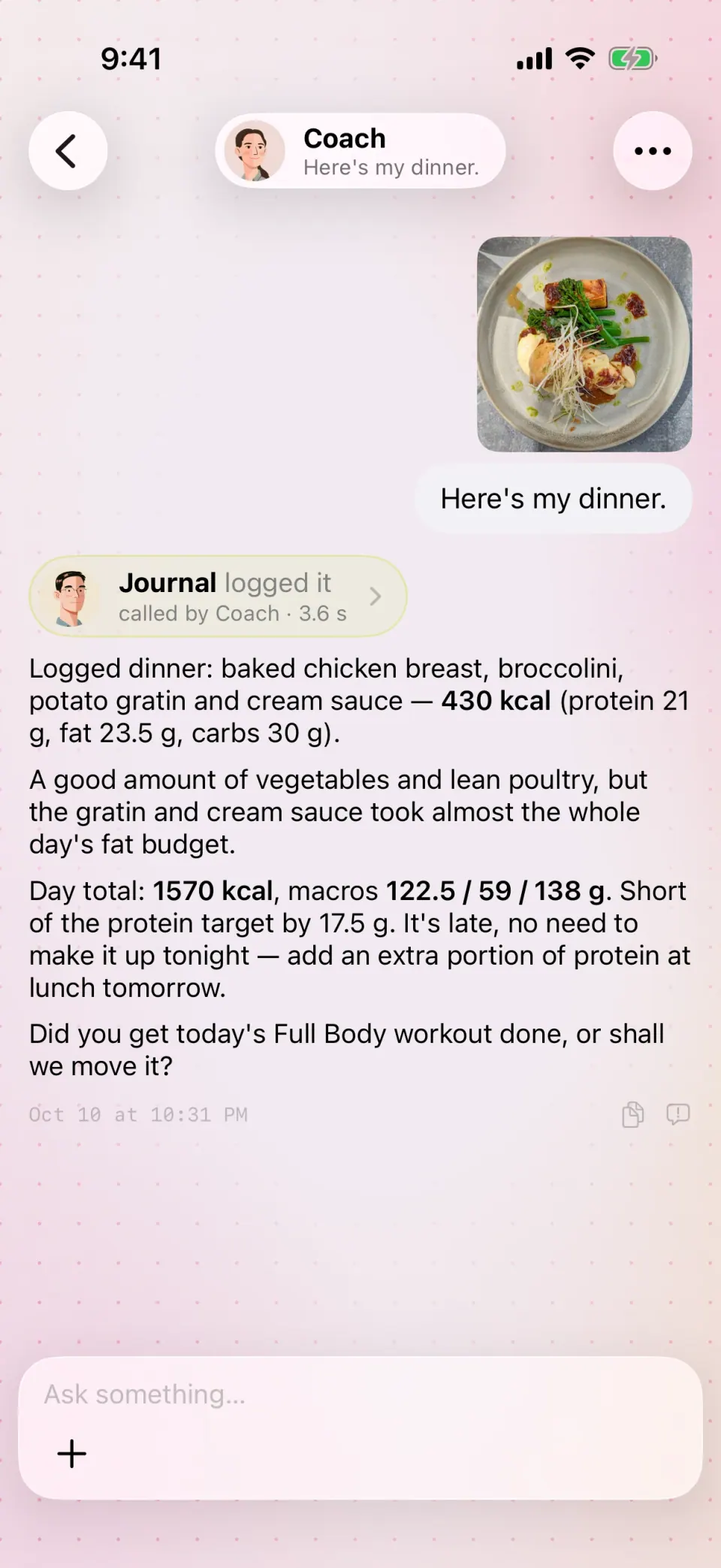
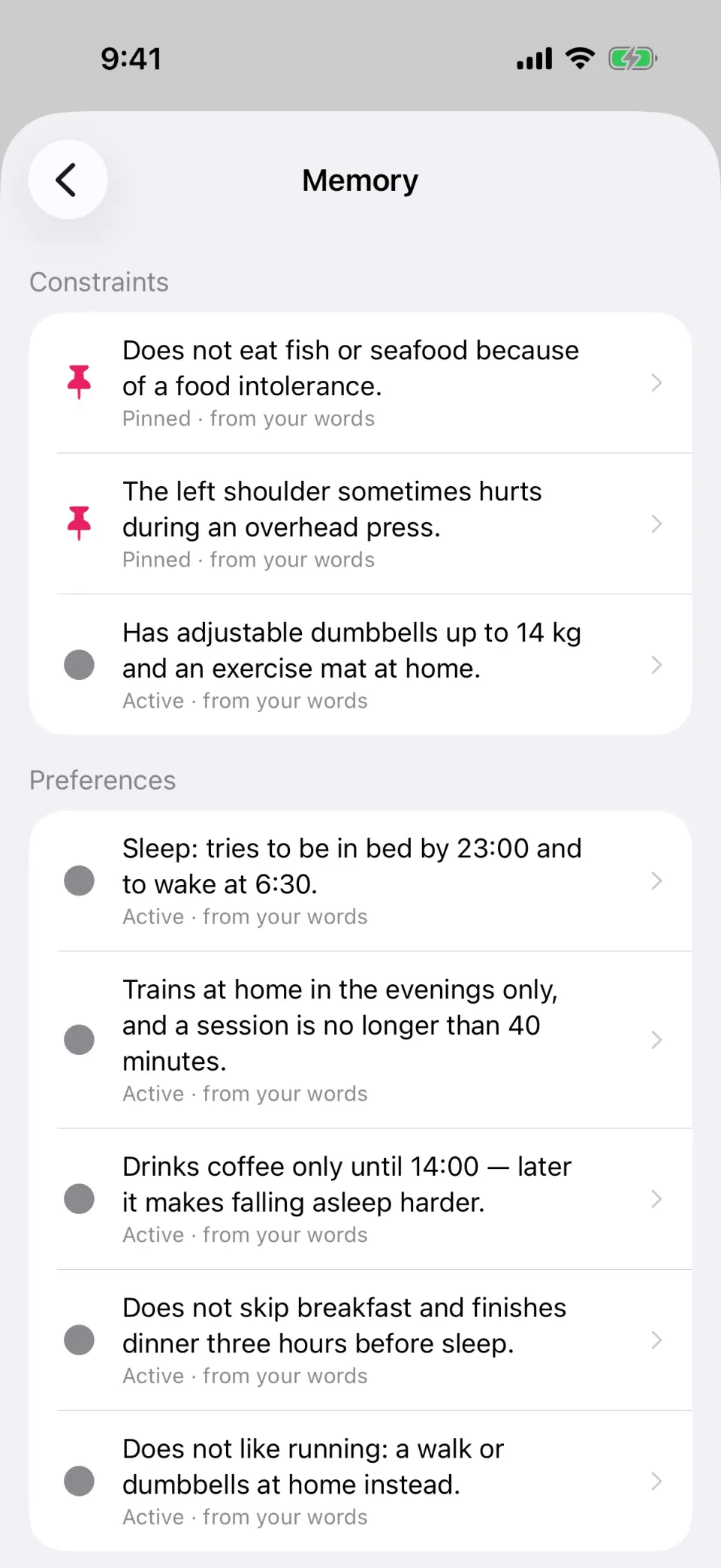
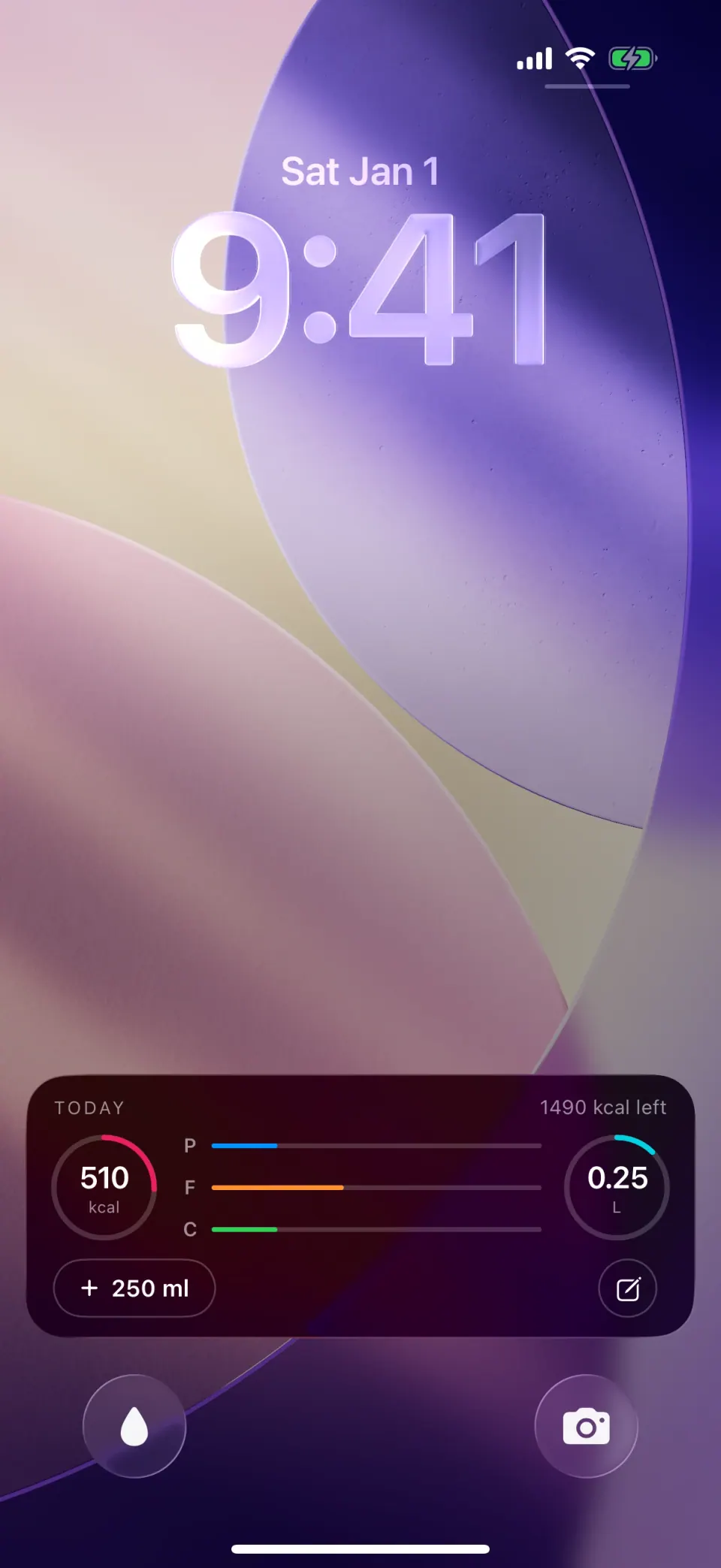
In a chat everything lives in the thread: after 3–4 weeks it sprawls, details get lost and numbers go wrong. In AkMe every entry — a meal, a workout, a measurement, a night — is stored in a database. Daily totals, trends, goal progress and body fat are calculated by software, not by the AI, so the numbers don't drift over time; your team reads the finished numbers and explains them. And it writes first instead of waiting for you to ask.
Where do the team's numbers come from?
There are two kinds. Your own numbers — calories, protein, weight, trends — are calculated by software from your entries, not by the AI, so they don't drift. Recommendations — how much protein, how much sleep, whether to do strength training — come from a library of research findings: reviews of studies, clinical trials, and guidelines from the WHO and professional bodies. Every finding is checked against its paper, and you can open the source right under the answer. When the evidence is thin or conflicting, your team says so.
Does it replace a doctor?
No. AkMe is a training, nutrition and routine aid, not a medical device. It does not diagnose or treat anything. If you have a medical condition or injury, or are pregnant, talk to your doctor before changing your diet or training.
Are there real people?
No. AI specialists work with you. There's no human in the conversation.
I'm over 50. Is it too late?
No. Your team builds the program from where you are: your experience, limits and time. Timelines are realistic, and the load grows gradually.
I already go to a gym. Is it for me?
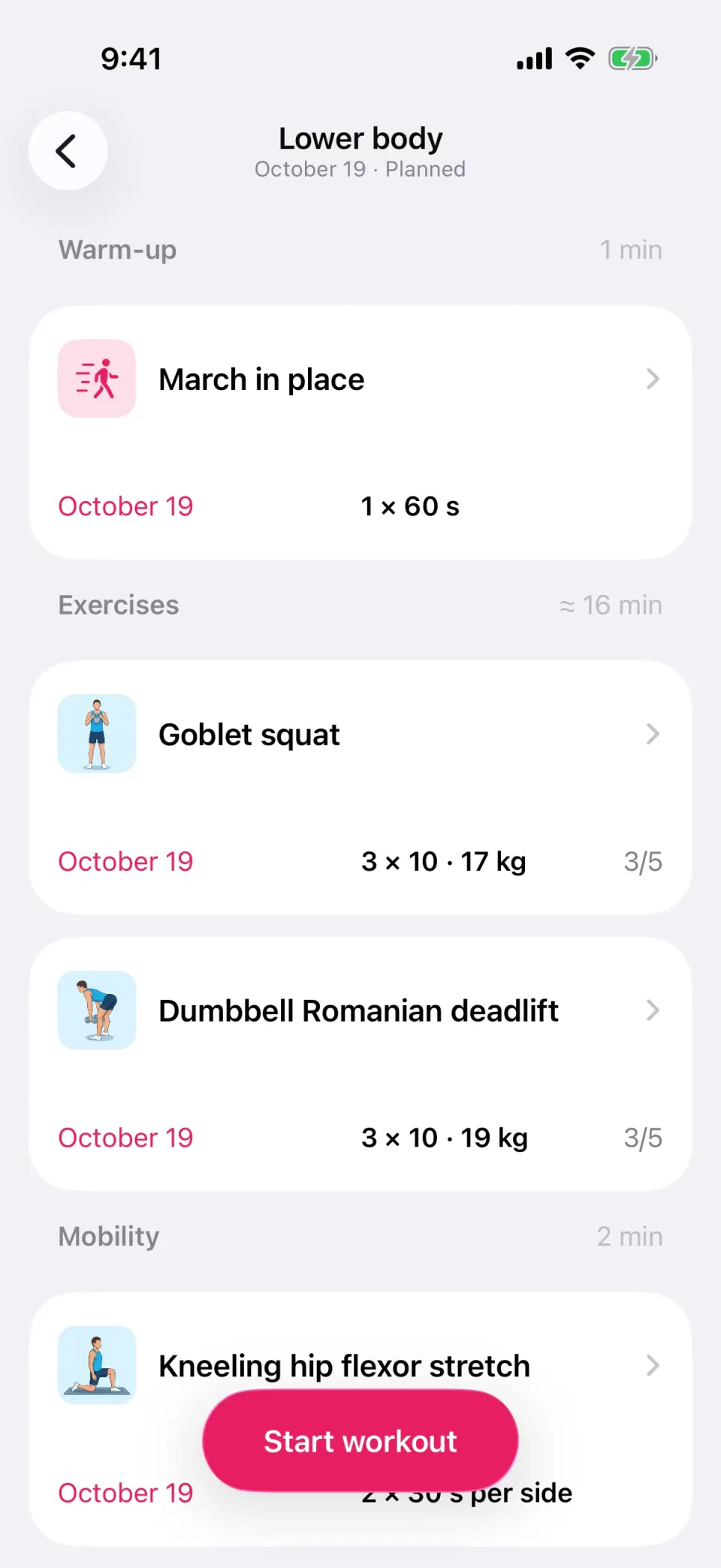
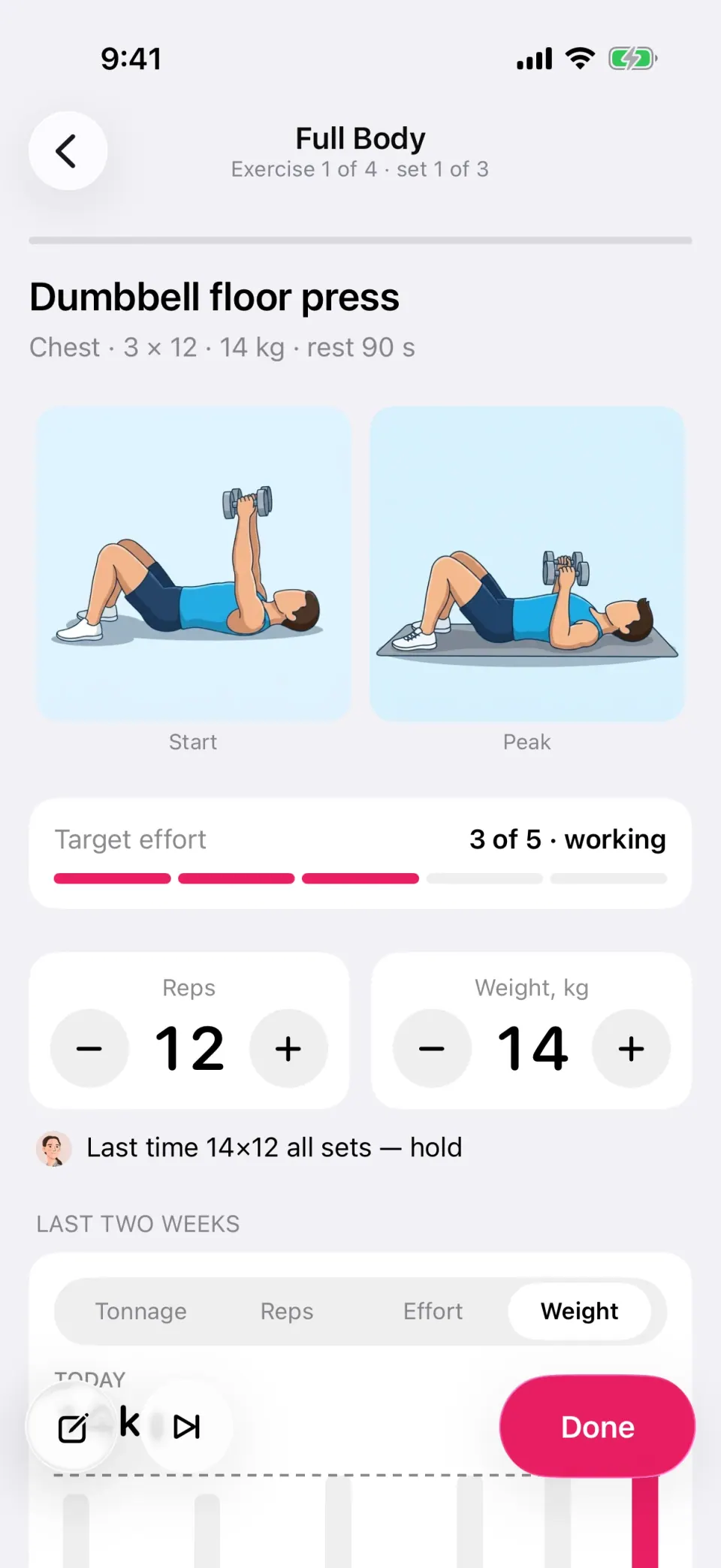
Yes. The exercise catalog includes barbell, kettlebell, cable and machine exercises. Tell the Methodologist where you train and it will plan around your place and equipment.
Do I need a watch or ring?
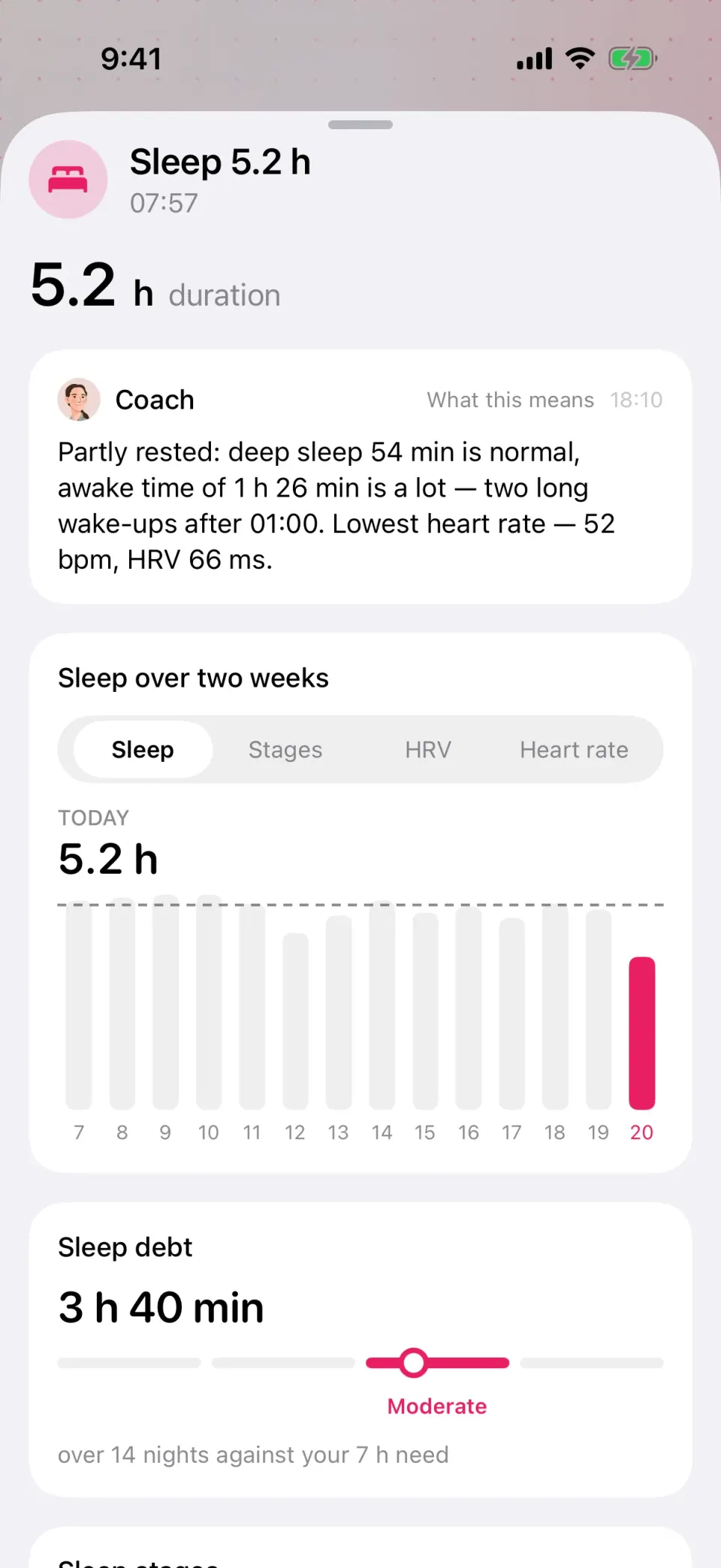
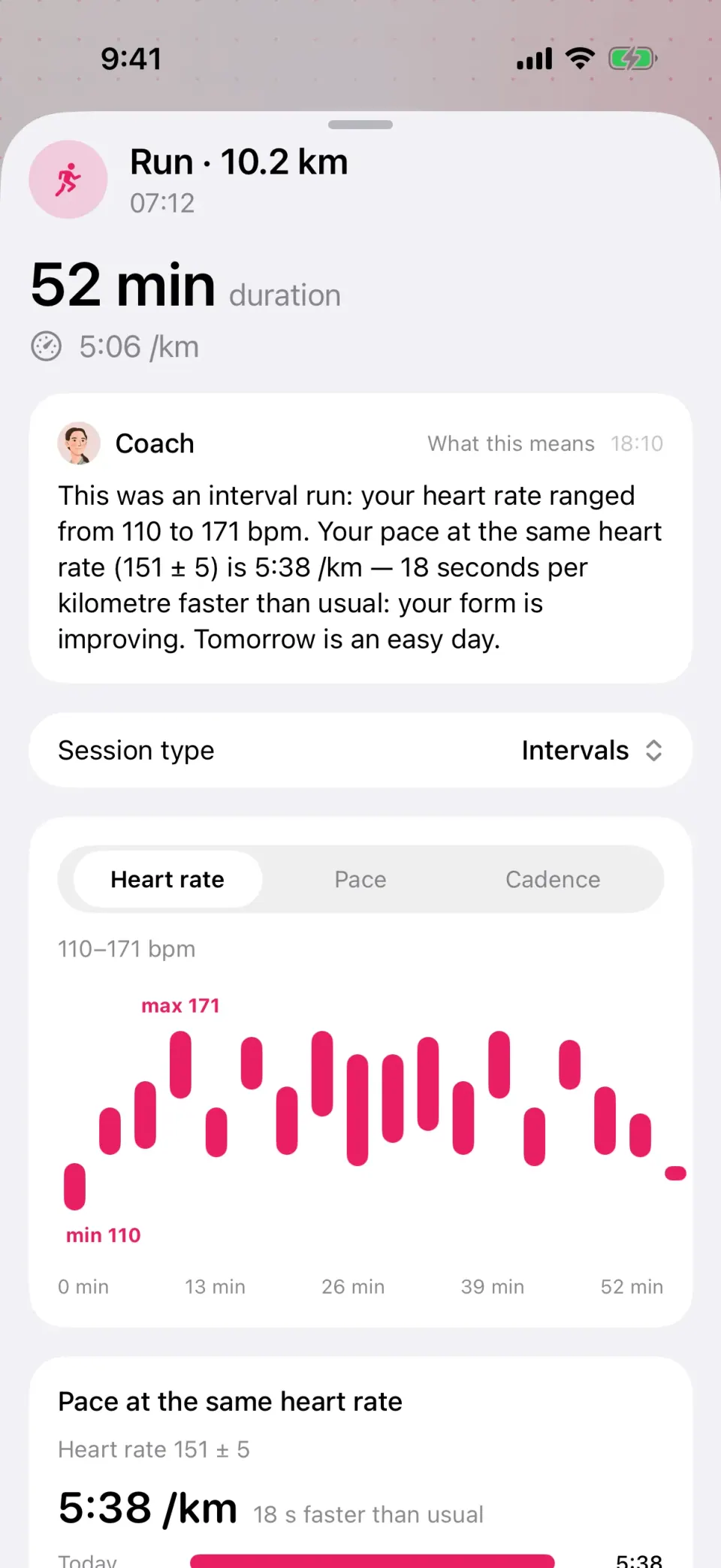
No. Everything works without one, and your iPhone alone gives the team your time in bed. A watch or ring that writes to Apple Health adds sleep stages, overnight heart rate and your runs, rides and swims.
I have an injury. Is it for me?
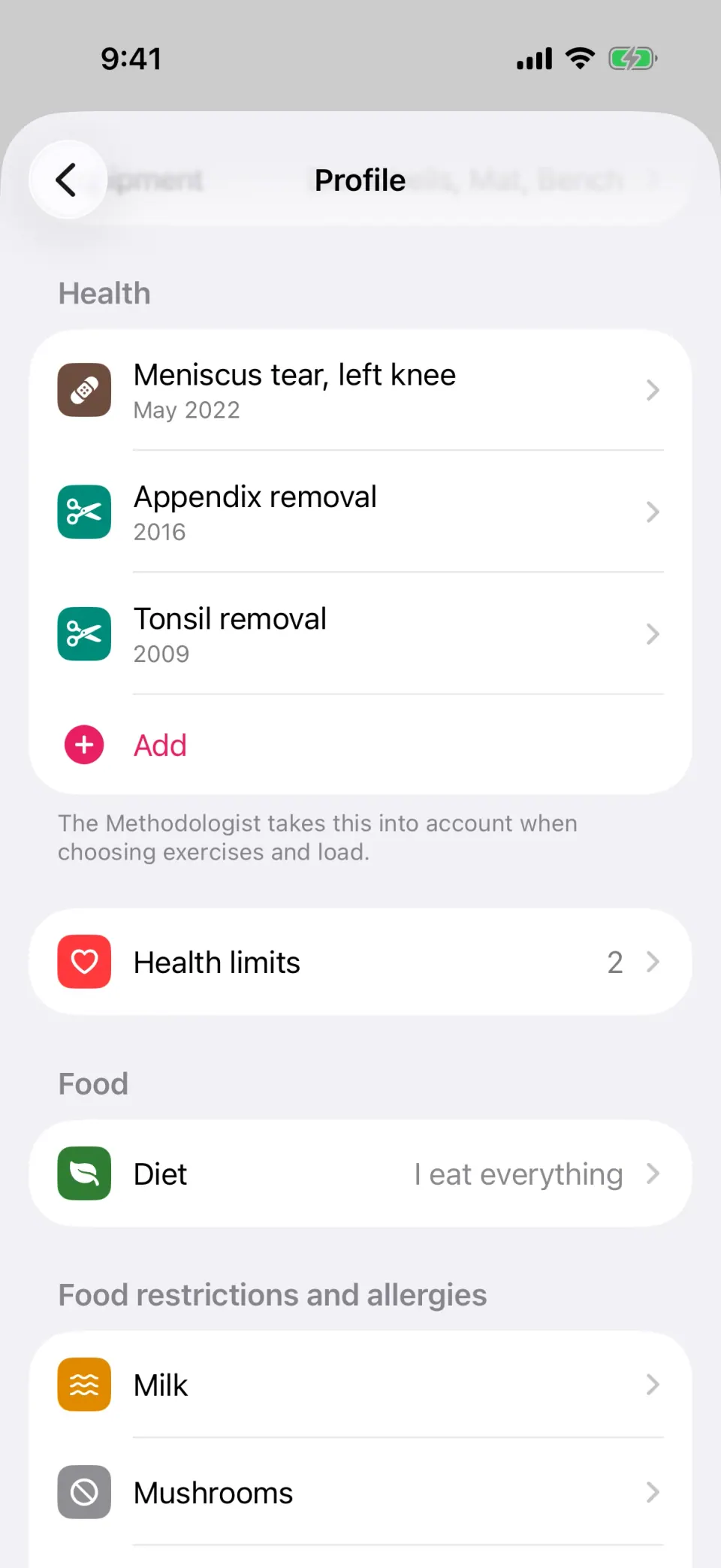
Yes. Add your surgeries and injuries to your profile — what happened and when — and the Methodologist picks exercises and load around them. If something hurts now, your team deals with that first and tells you to see a doctor if it's serious. We don't do rehabilitation.
I have a food allergy. Will it be taken into account?
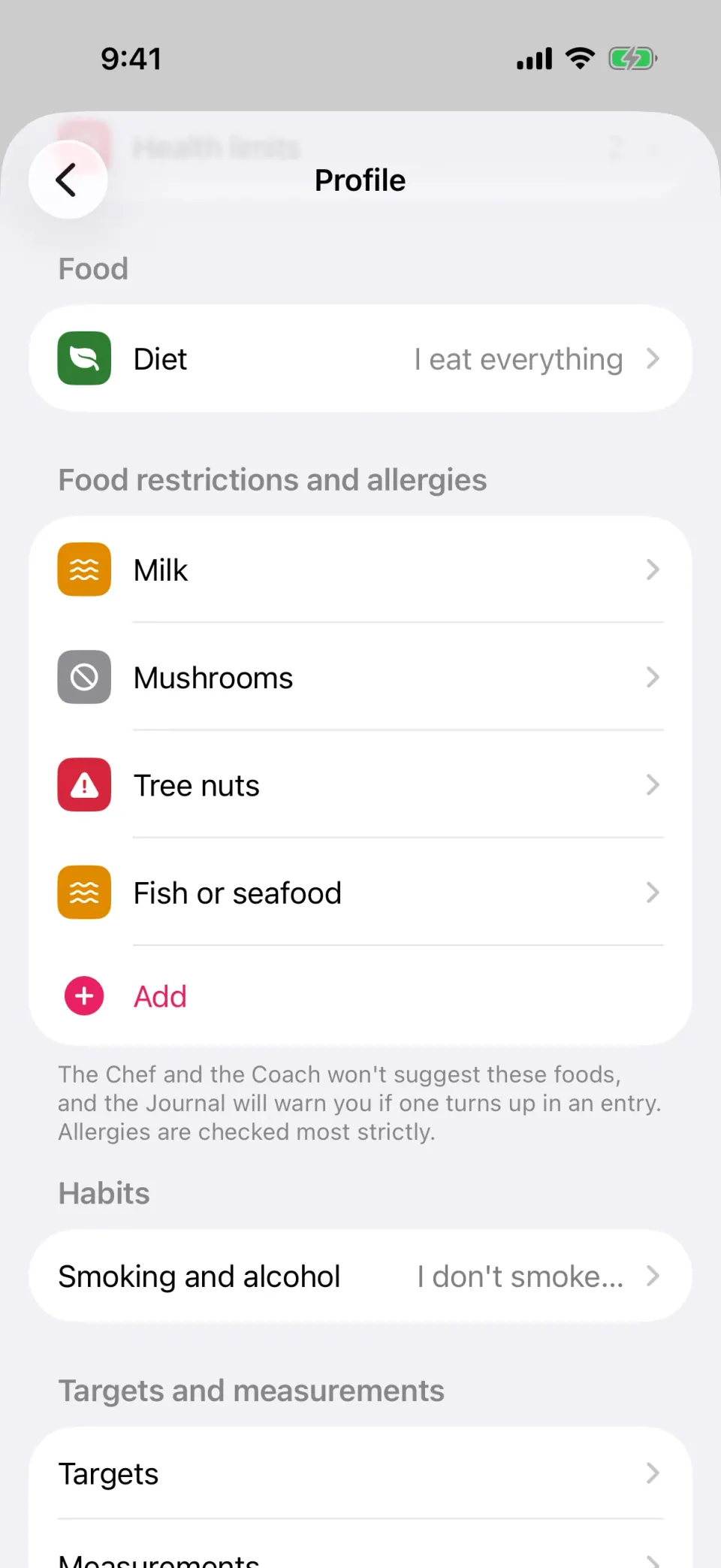
Yes. Mark it in your profile — the list covers the 14 major allergens, and you can add any other food. The Chef and the Coach won't suggest it, and the Journal warns you if it turns up in an entry. It's a help, not a guarantee: with a severe allergy, always check ingredients yourself.
I don't eat meat. Is it for me?
Yes. Choose how you eat — vegetarian, pescatarian, vegan, halal, kosher or your own way — and recipes and menus will follow it.
I smoke or drink. Is that a problem?
No. Just say so — your team factors it into your plan, no lectures. If you want to cut back, it'll help you set your own limit — but only if you ask.
What do I need?
An iPhone with iOS 26. Android later.
How much is it?
Free during the beta. After the App Store launch it will be a subscription.
Which languages?
English. Your team replies in the language you write in.
Who sees my data?
Only your agents. Data is stored in the EU, there are no ads and we never sell data. Details are in the privacy policy.
How do I delete my data?
Email hello@a4ai.dev from your account address — we'll delete it and reply within one month.
Why so few spots?
We set up every account by hand and watch how the product works for each new person, so we let people in in small groups.